


Other Blog

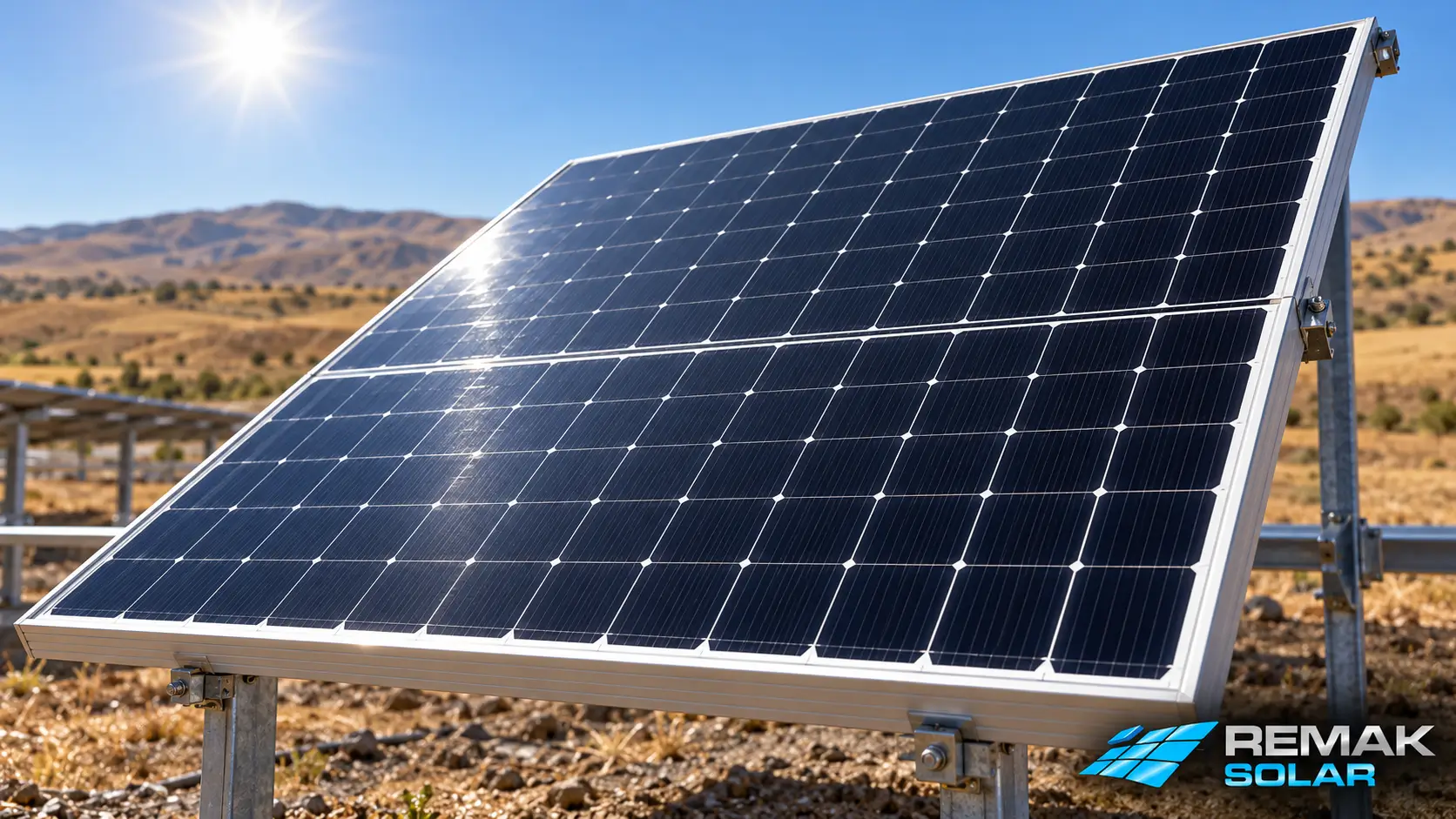

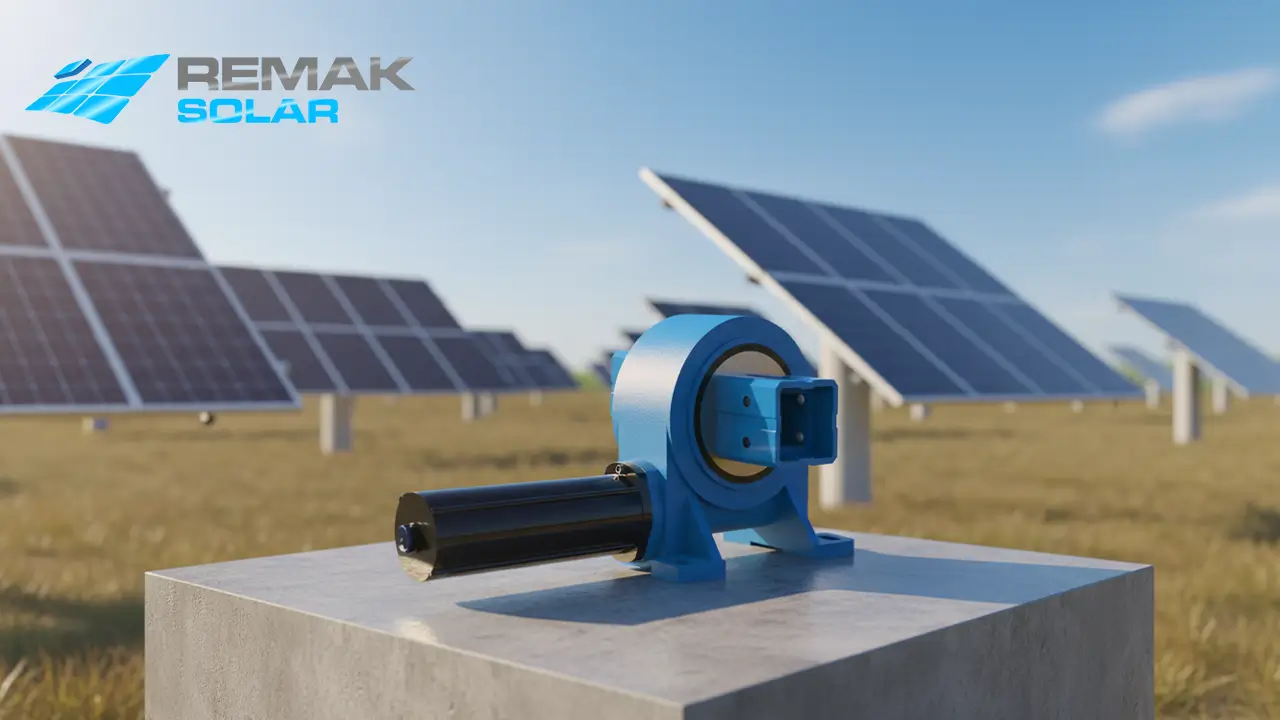


































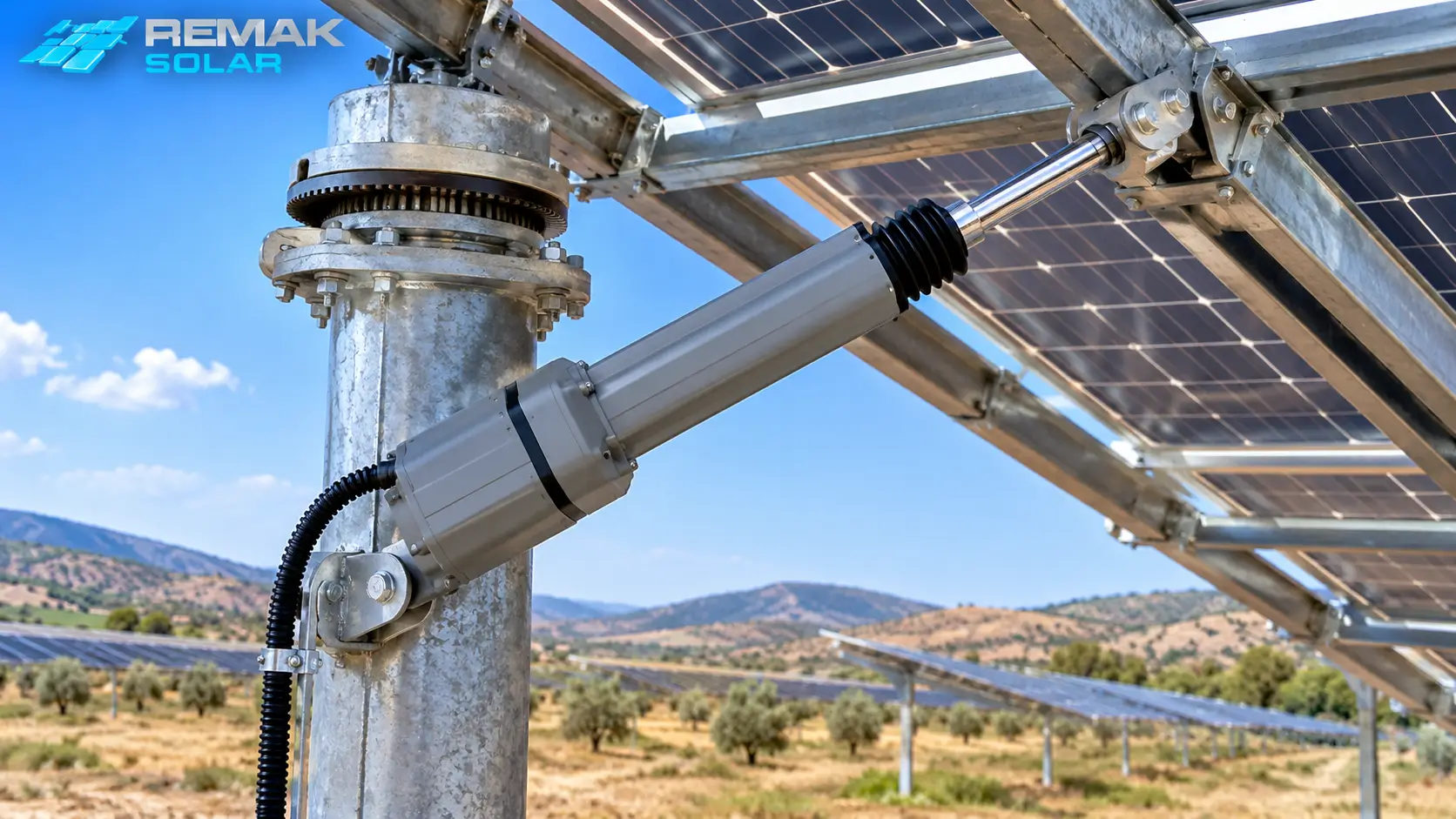
A linear actuator is a drive element that converts the rotational motion of a motor into forward-and-backward linear motion and pushes or pulls a load over a specified distance. In the field, it is also referred to as an "electric piston."
In solar trackers, a linear actuator is used to change the angle of the panels. It is most commonly used in dual-axis systems to adjust the panel's tilt, in other words, the elevation axis. In some single-axis designs, it rotates the torque tube through a lever mechanism, turning the panels from east to west. Below, you can find how the actuator works, its types, how it is used in solar trackers, how it differs from geared drives, and what you should consider when selecting one.
How Does a Linear Actuator Work?
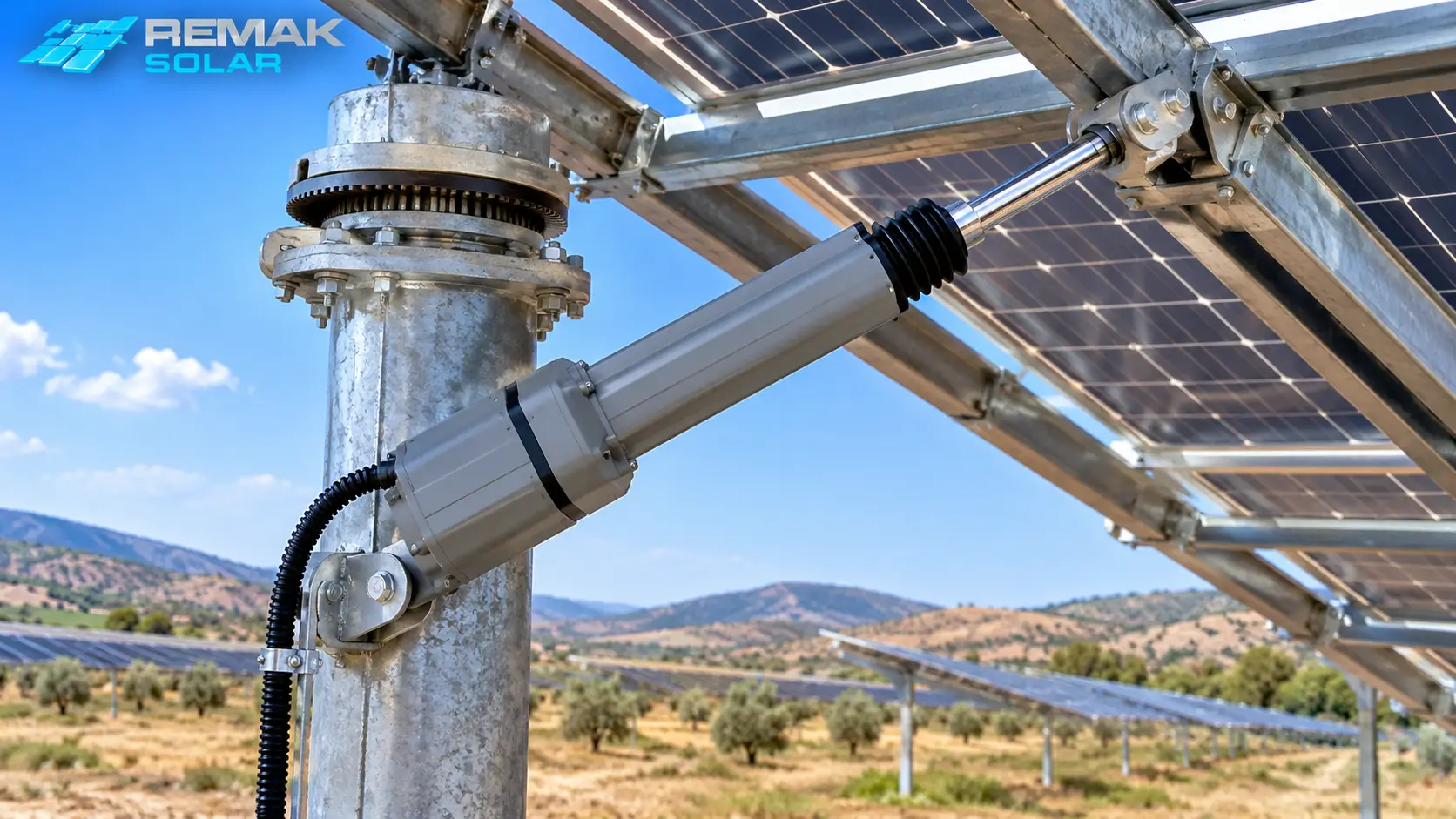
An electric linear actuator contains several basic interconnected components:
- Motor: Usually a small electric motor operating on direct current (DC), which provides the source of motion.
- Gearbox: Reduces the motor's high rotational speed and increases force.
- Lead screw and nut: The main mechanism that converts rotational motion into linear motion. As the screw rotates, the nut moves forward or backward.
- Piston rod: Extends or retracts together with the nut and pushes or pulls the load.
- Limit switches: Stop the motor at both ends of the stroke to prevent the mechanism from being overloaded.
- Position sensor: A sensor such as a potentiometer, Hall sensor, or encoder reports the current position of the piston to the control unit.
When the motor's direction of rotation is reversed, the piston extends or retracts. The control unit manages this movement using information from the position sensor and stops the piston at the desired point. In solar tracking systems, this point corresponds to the panel angle calculated according to the current position of the sun.
Types of Linear Actuators
Linear actuators are divided into three main groups according to the type of energy they use for movement:
- Electric actuators: Operate using a motor and screw mechanism. They are the most commonly used type in solar trackers because they are easy to install and control.
- Hydraulic actuators: Operate with pressurized oil and can generate very high forces. However, they require maintenance of pumps, hoses, and seals.
- Pneumatic actuators: Operate with compressed air. They are fast, but additional control equipment is required for precise stopping at intermediate positions.
The most important distinction in electric actuators is the type of screw used. This selection determines the efficiency of the actuator and whether it can hold the load when power is lost.
| Feature | Trapezoidal Screw | Ball Screw |
|---|---|---|
| Operating principle | The nut slides along the screw | The nut moves by rolling on balls |
| Efficiency | Lower | Higher |
| Load holding during power loss | Usually self-locking | Requires a brake or locking gear |
| Suitable application | Intermittent movement, load holding | Frequent and fast movement, high precision |
In solar tracking systems, the panels move in small steps throughout the day but must remain fixed at the same angle for long periods under wind load. Therefore, self-locking is an important advantage. If a ball-screw actuator is used, a brake mechanism capable of securely maintaining the position should be provided.
Where Is a Linear Actuator Used in a Solar Tracker?

There are two main ways to move panels in solar tracking systems: geared drives that generate rotational motion and linear actuators that push and pull. Depending on the geometry of the structure, the linear actuator performs two different functions.
Tilt Adjustment in Dual-Axis Systems
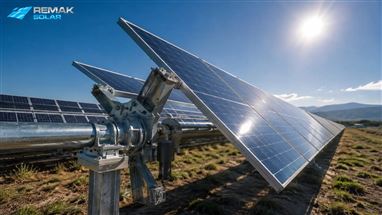
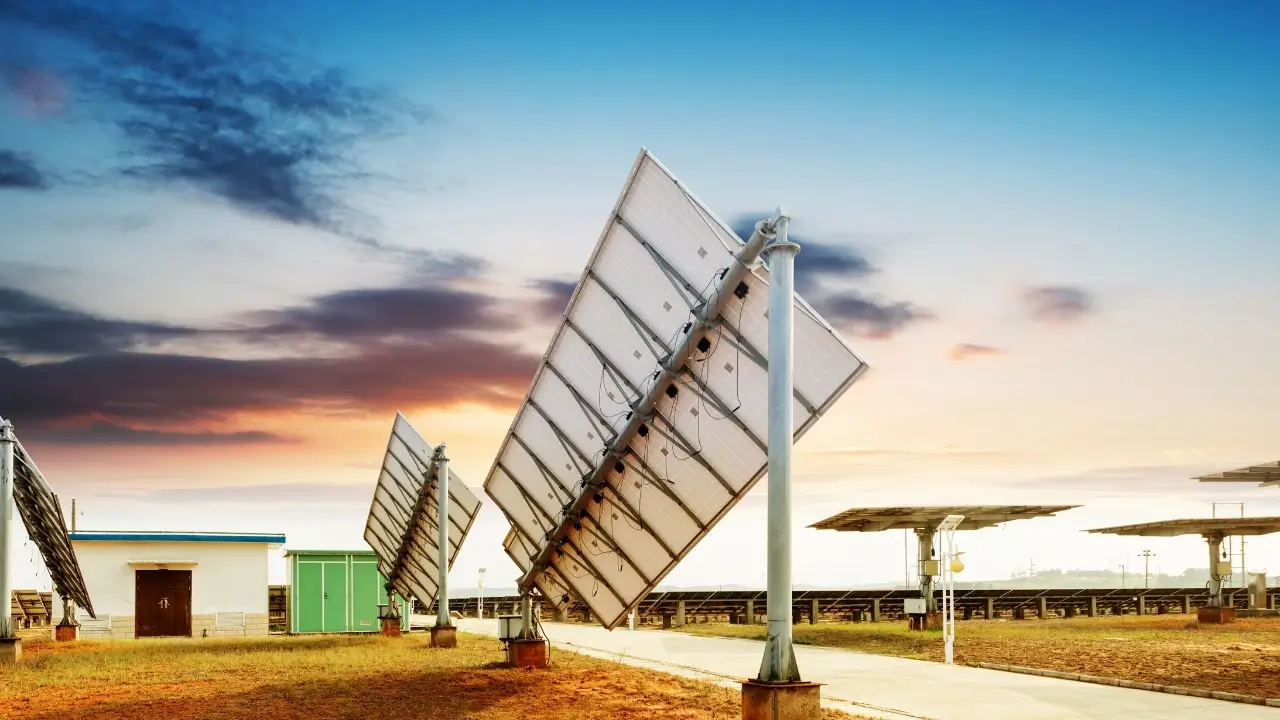
A dual-axis tracker follows the sun both in its east-west movement during the day and in its elevation, which changes seasonally. In common designs, the geared rotary drive mounted on the pole rotates the panel in the east-west direction (azimuth). The linear actuator connected between the pole and the panel carrier extends and retracts to adjust the panel's tilt (elevation angle). This arrangement allows the two movements to be controlled independently and simply.
Lever Mechanism in Single-Axis Systems
In some single-axis trackers, the linear actuator rotates the panel by pushing or pulling a lever connected to the torque tube. Because the lever provides mechanical advantage to the actuator, a relatively small motor can move a large panel array.
This approach has one limitation: the rotation angle is restricted by geometry. Academic studies have examined operating ranges of approximately ±60° for these systems. In a study examining the subject in detail, self-locking and high load-carrying capacity are listed among the advantages of trackers with linear actuators. Limited movement range and motor energy consumption are highlighted as the main issues that need to be addressed.
We explained the general differences between single- and dual-axis systems in our article on the difference between single-axis and dual-axis solar trackers.
Linear Actuator or Geared Drive?
Selecting the correct drive type depends on the system's movement range, the load it must carry, and site conditions. The table below provides a general comparison of the two solutions:
| Criterion | Linear Actuator | Geared Rotary Drive |
|---|---|---|
| Type of movement | Push and pull | Direct rotation |
| Movement range | Limited by stroke and connection geometry | Wider angles are possible |
| Typical function | Tilt adjustment, lever-type single-axis designs | Rotating the torque tube or azimuth axis |
| Position holding | Self-locking with trapezoidal screw | Self-locking in worm-gear structures |
In utility-scale ground-mounted plants using row-based single-axis systems, geared drives that directly rotate the torque tube are a common solution. For example, our ST7 single-axis solar tracker gearbox connects directly to 120x120 profiles. It also features a mechanical stop that prevents the panels from exceeding a certain angle under demanding conditions such as wind.
A linear actuator, on the other hand, is advantageous where the panel needs to be pushed and pulled in a controlled manner around an axis. The solar tracker piston in the Remak Solar product range operates between the support profile and the main pole, allowing the panels to move to the specified angle in a controlled and balanced manner. You can review all products on our solar tracker products page.
What Should You Consider When Selecting a Linear Actuator for a Solar Tracker?
Looking only at the force rating in the catalogue is not sufficient. For an actuator that will operate reliably in the field for many years, the following criteria should be evaluated together:
- Dynamic and static load: The force the actuator can apply while moving and the load it can hold while stationary are different. Since wind loads generally act on the panel while it is stationary rather than during movement, static holding capacity is at least as important as pushing force.
- Stroke length and connection points: The required stroke is calculated according to the desired angle range and the distance of the connection points from the centre of rotation. A shorter lever provides a larger angle with less stroke but increases the force applied to the actuator.
- Protection class: Since the actuator will operate for years under dust, rain, and sunlight, the housing and sealing elements must be suitable for outdoor conditions. The IP protection rating is the main criterion indicating resistance to dust and water.
- Duty cycle: Indicates how long the actuator can operate without overheating. Since panels move at short intervals throughout the day, this is generally not a problem in trackers. However, longer movements such as moving to a wind-protection position should be taken into account.
- Position feedback: Potentiometer sensors retain position information even when power is lost. Hall-sensor systems, however, must return to a reference point and be recalibrated after a power interruption.
- Voltage and control compatibility: The operating voltage and sensor signal of the actuator must be compatible with the system's control panel.
We explain the control logic of the tracking system and how the sun's position is determined in detail on our technology page.
Are You Looking for the Right Solar Energy Solution for Your Project?
Get a free site assessment and quotation from our expert team for solar tracking systems and fixed-panel installations tailored to your land, factory, or roof.
Frequently Asked Questions About Linear Actuators
Are a linear actuator and an electric piston the same thing?
In everyday use, they are generally used to mean the same thing. The term "electric piston" describes a motor-driven linear actuator. Hydraulic and pneumatic pistons also produce linear motion, but they operate using oil or air pressure and require additional equipment such as pumps or compressors.
Do the panels fall if the power goes out?
Trapezoidal-screw actuators are self-locking, so they remain in their current position when power is lost. In ball-screw models, this function is handled by a brake mechanism. A well-designed tracker also includes mechanical stops. This prevents uncontrolled panel movement even if a problem occurs with the actuator.
What voltage do linear actuators operate at?
Most electric linear actuators operate on 12 V or 24 V direct current. When selecting an actuator, its voltage should be considered together with the system's power supply and control panel. Voltage drop should also be taken into account over long cable distances.
How should an actuator operating outdoors be maintained?
During periodic inspections, connection pins and joints, the surface of the piston rod, the dust boot, and cable entries should be checked. Unusual noises during operation, slower movement, or failure of the panel to fully reach the target angle indicate that the actuator should be inspected. The calibration of the position sensor should also be verified at regular intervals.
Why are gearboxes used more frequently in large solar power plants?
In single-axis systems installed in long rows, the panels rotate over a wide angular range. Geared drives that directly rotate the torque tube can provide this wide angle without being constrained by lever geometry. Linear actuators, on the other hand, are advantageous in dual-axis systems requiring tilt adjustment and in lever-based designs. For the overall system structure, see our solar tracking system page.
Do Comment