
Rooftop solar power plants have become one of the most practical investments for significantly reducing electricity bills in both homes and businesses over the last few years. Below, I have gathered everything you need to know before installing a solar energy system on your roof in a simple and clear way.
What Is Rooftop Solar Energy (SPP)?
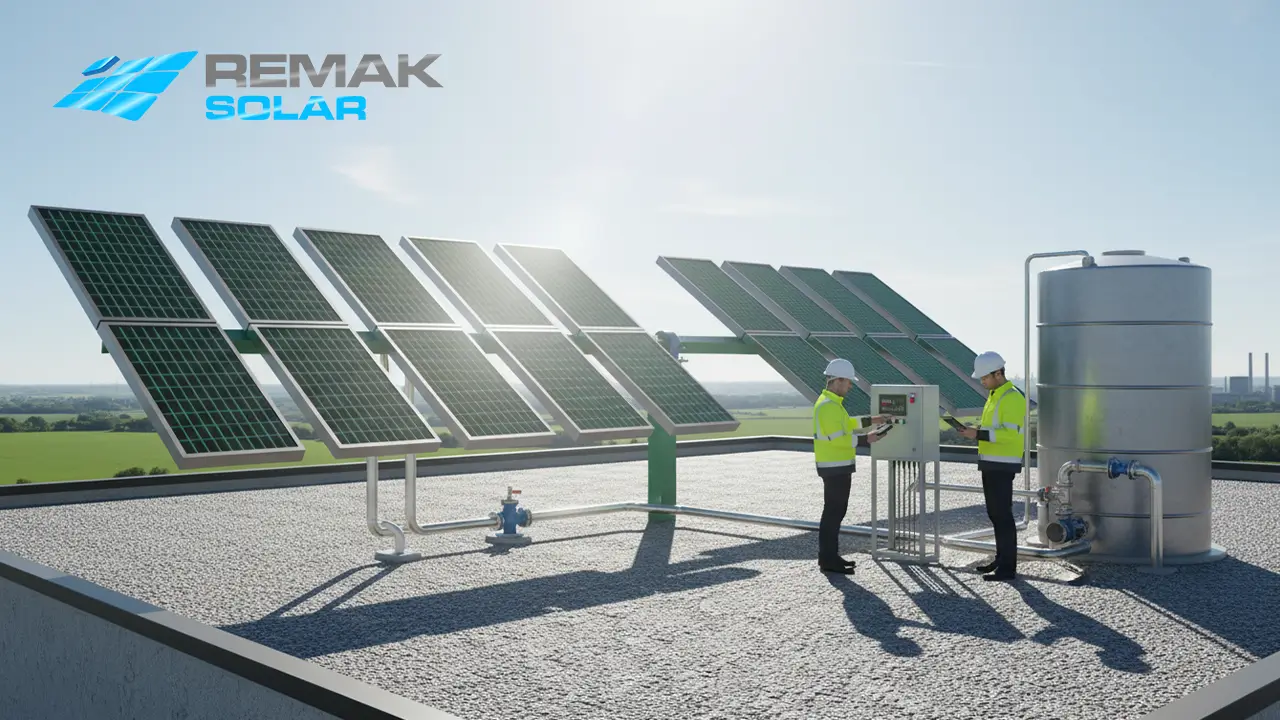
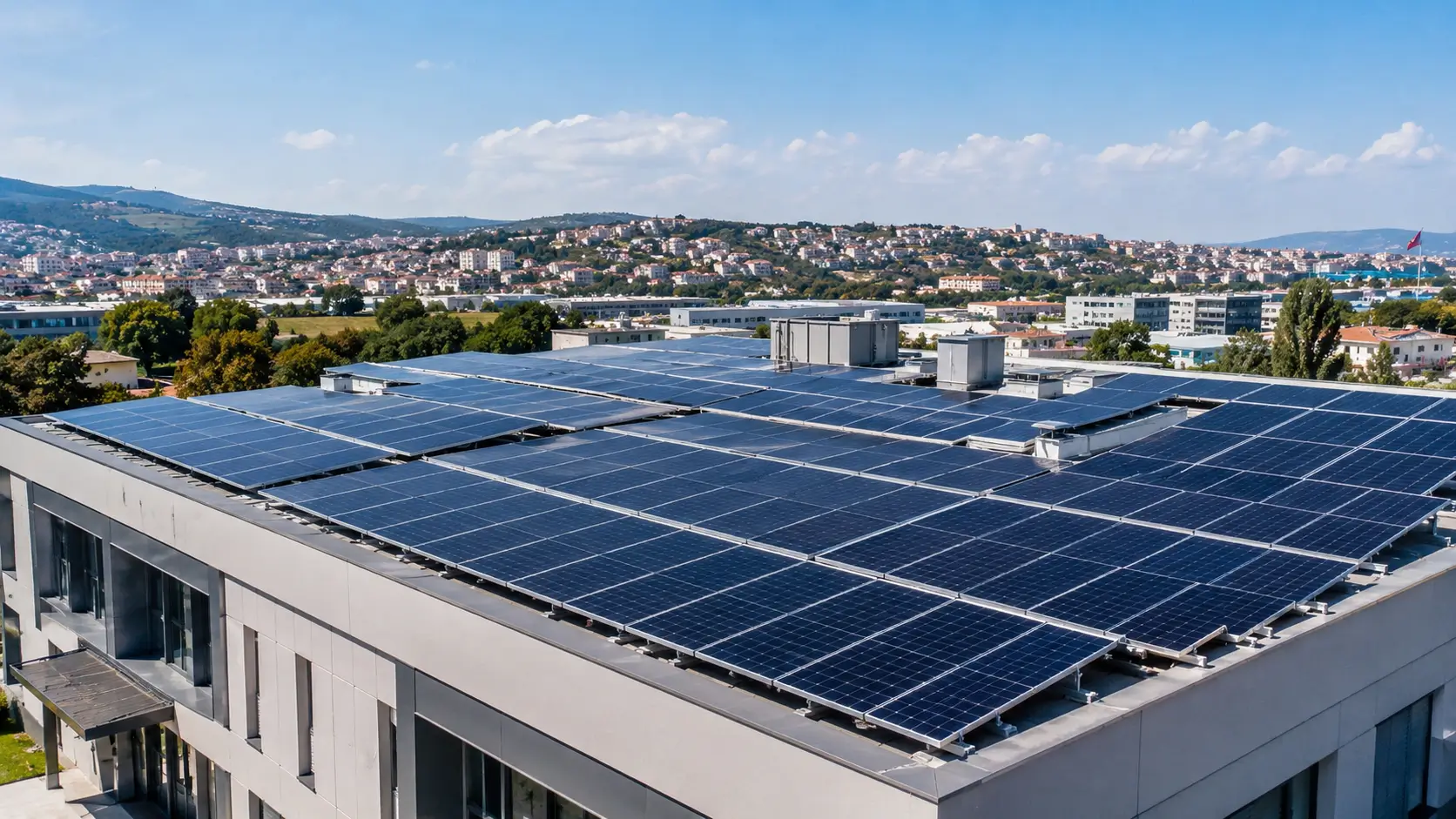
A rooftop SPP is a system that converts sunlight directly into electricity through solar panels installed on the roof of your building. The direct current produced by the panels is converted into alternating current that you can use at home or in the workplace through a device called an inverter. In other words, the blue-black panels you see on your roof quietly produce your own electricity throughout the day.
The best part of the system is that it reuses an existing area. An idle roof turns into a production site without any additional land cost. For this reason, it is a much more accessible solution than ground-mounted SPPs, especially for urban buildings, factories and warehouses.
Considering Turkey's solar irradiation potential, a correctly positioned rooftop system works efficiently throughout the year. Excess energy produced can be fed into the grid, while electricity drawn from the grid balances consumption when needed. Thanks to this logic, bill savings can be achieved even without batteries.
Which Buildings and Businesses Are Suitable for Rooftop SPP?
The most practical aspect of rooftop SPP is that it appeals to a very wide user base. Almost any roof that receives enough sunlight and has suitable load-bearing capacity can be evaluated for this system. However, the payback period is much shorter for certain building types.
Businesses with high daytime consumption benefit from this system the most. When production and consumption occur at the same hours, you use the electricity you generate instantly and draw minimum electricity from the grid.
The following building and business types stand out for rooftop SPP:
- Factories and production facilities: The group with the fastest amortization thanks to wide roof areas and high daytime consumption.
- Warehouses and logistics centers: Their flat and large roofs are highly suitable for high-capacity installations.
- Cold storage facilities: Since they consume energy continuously and intensively, the saving effect is clearly noticeable.
- Hotels and holiday resorts: They balance the high electricity demand, especially during the summer months.
- Shopping malls, markets and commercial buildings: They significantly reduce the lighting and cooling load.
- Detached houses: A scalable solution that reduces monthly electricity bills for homes with roofs at a suitable slope.
Apartment rooftops can also be evaluated, but a joint decision among flat owners is required here. Still, when consensus is reached in the management plan, installation is possible for common area electricity or individual use.
What Does Installing Solar Panels on Your Roof Provide?
The first and most tangible benefit is, of course, the reduction in electricity bills. A correctly sized system can meet a large part of your annual consumption. Many businesses notice that their bills are reduced by half or even more.
In addition, rooftop SPP is an investment that adds value to your building. A property that generates energy becomes more attractive in terms of both sale and rental. Buyers now prefer buildings with low operating costs.
The environmental contribution should not be ignored either. Every kilowatt-hour of clean energy you produce reduces carbon emissions. This is becoming an increasingly important criterion, especially for companies that export and must report their carbon footprint.
In the long term, you also gain a shield against rising energy prices. As the unit price of electricity increases every year, you are affected much less because you produce your own energy. Over the years, this difference grows exponentially. If you want to clearly see your savings before installation, you can use our solar energy calculation tool to reach estimated values for your own building.
What Is the Cost of Rooftop SPP and How Many Years Does the System Pay for Itself?
Cost is the first topic almost everyone is curious about. The total amount varies depending on the power of the system, the quality of the panels and inverter, the structure of the roof and the installation conditions. Therefore, it is more accurate to discuss an approximate range rather than a fixed figure.
The general rule is this: As the system size increases, the cost per kilowatt decreases. In other words, a 50 kW installation is more economical per kilowatt than a 5 kW system. The table below has been prepared to give a rough idea for systems at different scales.
| System Power | Suitable Use | Annual Production | Amortization |
|---|---|---|---|
| 5 kW | Detached house | 7,000 - 8,000 kWh | 5 - 7 years |
| 10 kW | Large house / small workplace | 14,000 - 16,000 kWh | 4 - 6 years |
| 50 kW | Workshop, market, office | 70,000 - 80,000 kWh | 3.5 - 5 years |
| 250+ kW | Factory, warehouse, facility | 350,000+ kWh | 3 - 4.5 years |
The values in the table may vary depending on the region, sunshine duration and consumption habits. While the system pays for itself faster in a business with high daytime consumption, the period may be slightly longer in a house that consumes electricity mostly in the evening.
After the amortization period is completed, the electricity produced by the panels becomes entirely your profit. Since panels generally have a lifespan of 25 years or more, the system continues to generate returns for you for a long period after the payback period.
Which Permits Are Required to Install a Solar Energy System on the Roof?
The permit process varies depending on the power of the system and the way it connects to the grid. The good news is that the process is quite simple for small residential-scale systems. Installations up to a certain capacity can be implemented with a simplified application procedure.
Before installation, an application is usually submitted to your local distribution company. At this stage, the load-bearing suitability of the roof, meter status and subscription information are evaluated. Then, after the approval of the distribution company is obtained, installation begins.
For larger commercial and industrial systems, project design, static report and approvals from the relevant authorities come into play. Although this process may seem complex at first glance, when you work with an experienced company, all bureaucratic steps are carried out on your behalf.
You do not have to follow this whole process alone. When you contact us, we plan all stages for you from application to commissioning. If you want to see the applications we have completed before, you can review our projects.
How Is Rooftop SPP Installation Carried Out Step by Step?
When planned correctly, a rooftop SPP project consists of clear consecutive stages. Below, I have listed the typical flow of the process:
-
Site survey and measurement: The orientation, slope, shading condition and load-bearing capacity of the roof are examined on site.
- Consumption analysis: Your past electricity bills are evaluated and the most suitable system power for your needs is determined.
- Project design: Panel layout, inverter selection and cabling details are transferred to technical drawings.
- Permit and application: Necessary approvals are obtained from the distribution company and relevant institutions.
- Installation: The mounting structure is installed, panels are fixed and inverter connections are made.
- Testing and commissioning: The system is checked, meter replacement is completed and production starts.
- Monitoring: Production data is monitored remotely and the healthy operation of the system is continuously checked.
Each of these steps requires meticulous work. Installation quality is especially critical for the system to operate efficiently and last for many years. A solid mounting structure and proper waterproofing application ensure that your roof remains problem-free for years.
The process does not end after installation; the real process begins here. Thanks to regular monitoring, any performance loss in the panels is detected early and intervention is made. This guarantees that your investment maintains the return you expect throughout its lifetime.
Differences Between Rooftop SPP and Ground-Mounted SPP
Both systems serve the same purpose, but they differ in terms of the surface they are installed on and the technology they use. Rooftop SPP evaluates an existing area, so it does not require additional land cost and is ideal for urban buildings. Ground-mounted SPP, on the other hand, is installed over a large area for larger-scale production.
One of the most important differences appears in efficiency-enhancing systems. In large ground-mounted power plants, a solar tracking system can be used to keep the panels perpendicular to the sun throughout the day. This technology significantly increases production compared to fixed installations. To get details about single-axis and dual-axis solutions, you can review our products.
In rooftop systems, panels are generally fixed parallel to the slope of the roof. The aim here is to obtain maximum production from the existing area in a practical and economical way. Which system is suitable for you depends on the area you have, your budget and your target production scale. Working with an experienced team in the field makes a major difference in making the right decision. If you want information about our company's approach and production infrastructure, you can visit the about us page.
In short, rooftop SPP is a smart starting point for a wide audience, from individual users to large businesses, with its low initial cost and fast installation. Turning your idle roof into a source of income contributes to both your budget and the environment for many years.
Do Comment