


Hourly netting is a ACcalculation method based on comparing the electricity generated and consumed within the same hourly time interval in unlicensed electricity generation. With the regulation introduced by EPDK, the monthly netting system used for many years was replaced by this model. Electricity generated by a solar power plant is now offset not against total consumption at the end of the month, but against consumption during the hour in which it is generated.
Although this change may seem simple, it fundamentally alters the logic of the system. Under the previous model, even if your facility generated surplus electricity at midday, that generation could be deducted from your evening consumption. The grid effectively operated like a virtual battery. Under hourly netting, however, each hour is assessed separately, making it far more important to consume the electricity you generate at the same time.
The core purpose of the regulation is to encourage generation and consumption to coincide in time. Using the energy produced during the hours of strongest sunlight within those same hours delivers the greatest benefit from the system. When the hourly alignment between generation and consumption is weak, surplus energy is exported to the grid at a low price.
In short, hourly netting turns unlicensed generation into a more disciplined energy-management process. For investors, not only how much electricity is generated but also when it is generated is now decisive. At this point, solutions that bring the generation curve closer to consumption hours directly affect profitability.
How Is Hourly Netting Calculated?
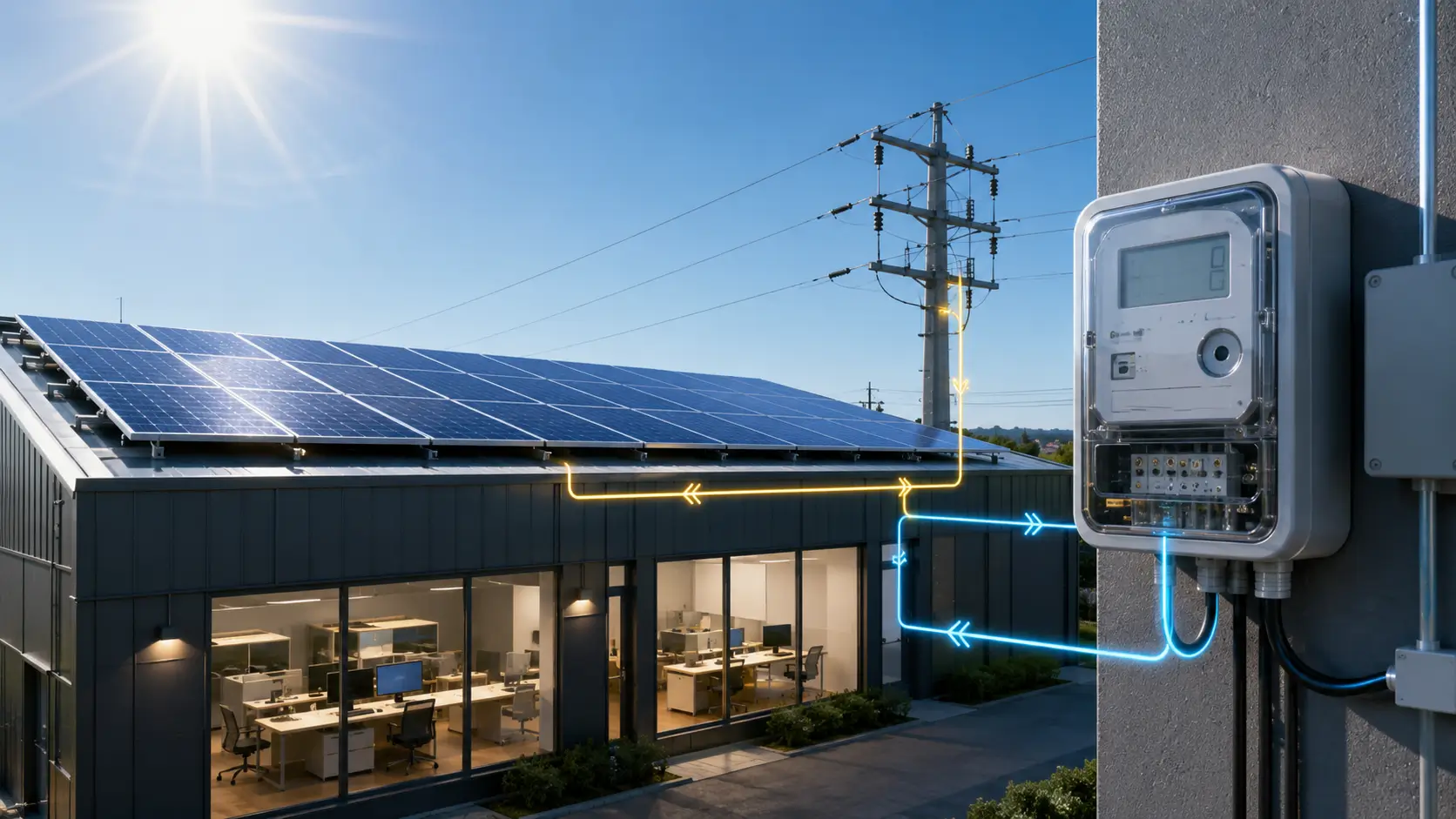
The basis of the calculation is straightforward: for each hour, the amount consumed during that hour is deducted from the amount generated. If the result is positive, surplus energy remains and is supplied to the grid. If the result is negative, the shortfall is drawn from the grid and paid for to your supplier.
Let us explain with a concrete example. Suppose your facility generated 100 kWh between 12:00 and 13:00, but consumed only 60 kWh during the same hour. In this case, 60 kWh directly covers your own consumption and is deducted from your bill. The remaining 40 kWh is treated as surplus energy and valued at the Market Clearing Price (PTF) for that hour. At 20:00, when your generation falls to zero and you consume 70 kWh, you purchase all of that energy from the grid at the retail tariff.
This is precisely where the key issue lies. The surplus energy generated at midday and the energy drawn in the evening do not offset one another because they occur in two different hours. Surplus generation is generally sold at PTF, which is lower than the retail sales price, while the energy drawn in the evening is billed at a higher tariff. This price difference is also the main factor behind the impact of hourly netting on investment payback.
To calculate accurately, you need a clear understanding of your facility’s hourly generation profile and consumption curve. If you want to estimate how generation will be distributed throughout the day before installing a system, you can make an initial assessment with our solar energy calculator . A correctly sized system operates much more efficiently under hourly netting.
Difference Between Monthly and Hourly Netting
The most critical distinction between the two models is the time period over which balancing is performed. Under monthly netting, generation and consumption are aggregated over the entire month and the difference is used as the basis. Under the hourly model, each hour is assessed independently. This can create a significant difference in revenue between two facilities with the same amount of generation.
Under the monthly system, the distribution of generation and consumption throughout the day was not important. Generating at midday and consuming in the evening caused no problem as long as the total monthly balance matched. Under the hourly system, however, if generation and consumption do not occur in the same hour, surplus generation is sold at a low price. This may create a disadvantage, especially for households and businesses that consume little during the day and much more in the evening.
The table below summarises the main differences between the two models:
| Comparison Criterion | Monthly Netting | Hourly Netting |
|---|---|---|
| Balancing period | Entire month | Each individual hour |
| Time alignment of generation and consumption | Not important | Decisive |
| Value of surplus energy | More advantageous | Based on PTF, generally low |
| Role of the grid | Like a virtual battery | Based on real-time balancing |
| Need for storage | Low | High |
| Investment payback period | Shorter | May be longer depending on the profile |
As the table shows, the hourly model brings the alignment of generation and consumption curves to the forefront. Therefore, when designing systems in the new period, not only annual generation but also its hourly distribution must be taken into account. Technologies that extend generation into the afternoon and early evening stand out for strengthening this alignment.
Impact of Hourly Netting on the Electricity Bill
The effect on your bill depends on how much of your consumption overlaps with your generation hours. A business with high daytime consumption, while the sun is shining, is barely affected by this model. Because most generation is consumed instantly, there is little need to sell surplus energy and the bill falls substantially.
By contrast, the picture changes for users whose consumption is concentrated in the evening and at night. Energy generated during the day cannot be consumed at those hours, so it is exported to the grid as surplus and sold at PTF. Energy drawn in the evening is then charged at the retail price. The gap between these two prices may result in a higher net cost than under the monthly model.
Example analyses shared by EPDK show that an industrial facility earning a certain level of revenue under the monthly model may operate with somewhat lower revenue under the hourly model. The size of the difference varies according to the bilateral contract price in the supply agreement and the facility’s consumption habits. In other words, the billing impact is not the same for every facility; it depends entirely on the consumption profile.
The most reliable way to protect your bill is to shift consumption to generation hours or move generation closer to consumption hours. Moving flexible loads such as cold-storage systems, water pumps and air-conditioning units into daytime operation provides a quick benefit. On the generation side, choosing systems that produce more evenly and for longer throughout the day reduces fluctuations in the bill.
What Happens to Surplus Electricity?
Surplus energy is electricity that cannot be consumed within the same hour and is supplied to the grid. Under hourly netting, this energy is no longer valued at the retail tariff but at the Market Clearing Price applicable during that hour. Because PTF tends to fall around midday, when solar generation is abundant, the unit value of surplus generation often remains below expectations.
This means that the idea of ‘I can sell whatever I generate’ is no longer valid. In the past, surplus generation was regarded directly as revenue; now every kilowatt-hour must be evaluated within the hourly balance. For this reason, installing systems far larger than consumption may no longer be as sensible as it was previously. To preserve the value of surplus generation, it must either be consumed during that hour or stored.
Two main strategies stand out here. The first is energy-storage systems, or batteries. Surplus energy generated during the day is stored and used in the evening, when prices and consumption rise. The second is to spread the generation curve across consumption hours. While fixed panels reach a peak at midday and then decline rapidly, solar-tracking systems offer a broader generation window from morning to evening.
For investors seeking to reduce surplus energy by widening the generation curve, solar tracking system solutions provide a clear advantage. By keeping panels perpendicular to the sun throughout the day, these systems increase morning and late-afternoon generation and improve overlap with consumption. As a result, the amount of surplus energy sold at a low price falls and the self-consumption rate rises.
Who Can Benefit from Hourly Netting?

Who benefits most from this model is directly related to the consumption profile. Users who both generate and consume during the day can benefit comfortably from hourly netting, while users whose consumption shifts into the evening need to take additional measures. The following groups should assess their position carefully in this period:
- Industrial facilities operating daytime shifts: Because production lines operate during daylight hours, the generated energy is consumed immediately. This group is the least affected by the hourly model and achieves the highest efficiency.
- Cold-storage and agricultural irrigation facilities: These businesses consume large amounts of energy during the day, naturally aligning generation with consumption and preserving their billing advantage.
- Hotels, hospitals and shopping centres: Because air-conditioning, lighting and general loads are distributed throughout the day, their self-consumption rates are high; with the right design, the model works in their favour.
- Companies with multiple consumption points: Because a group-netting structure can be established, a more flexible balance can be achieved between generation and consumption points.
- Households with predominantly evening consumption: This is the group that needs to exercise the greatest caution. Without storage or load shifting, they risk selling surplus energy at a low price.
As can be seen, whether the model is advantageous depends more on the daily consumption pattern than on the sector itself. Analysing your hourly consumption curve before installing the system clearly reveals which group you fall into and what additional solutions you may need.
Hourly Netting Requirements for Rooftop Solar Installations
When installing a rooftop solar power plant, certain technical and administrative conditions must be met to qualify for hourly netting. These requirements ensure both system suitability and full regulatory compliance. Investors planning a rooftop solar installation are advised to review the following points before installation:
- Link to a consumption subscription: The generation facility must be associated with an existing electricity-consumption subscription. Netting is carried out through this subscription.
- Suitability of the metering infrastructure: A bidirectional meter capable of reading hourly data is mandatory. The hourly balance can be calculated correctly only with this infrastructure.
- Balance between installed capacity and consumption: The system capacity must be sized according to the consumption profile. An installation far exceeding consumption causes surplus energy to be sold at a low price.
- Equipment-age requirement: Under the regulation, main equipment such as panels, inverters and batteries is expected to have been manufactured within the specified period. Older equipment may not be accepted.
- Connection agreement and approvals: A connection agreement must be concluded with the distribution company and the required project approvals must be completed.
In addition to these requirements, the structural strength, orientation and shading conditions of the roof directly affect generation efficiency. South-facing, unshaded roofs with a suitable pitch deliver the highest yield. If the roof structure is unsuitable or land is available, tracking systems that offer higher generation than fixed systems may be considered. To review different system options, visit our products page .
How Does the Hourly Netting Application Process Work?
The application process essentially follows the steps for an unlicensed generation application and consists of several basic stages. The first step is to apply to your distribution company and request connection capacity appropriate to your installed capacity. At this stage, information about your consumption subscription and the technical details of the system you plan to install are requested.
Following the application, the distribution company conducts a technical assessment and issues its connection opinion. If the opinion is positive, the generation-facility project is prepared and submitted for approval. Once project approval is completed, the installation stage begins. During installation, fitting a bidirectional meter and establishing the required metering infrastructure are crucial, because hourly netting cannot operate without this infrastructure.
Once installation is complete, provisional acceptance procedures are carried out and the system is commissioned. From this point onward, your generation and consumption data begin to be recorded on an hourly basis. Billing is then performed using these hourly data, with each hour balanced independently. For the process to proceed smoothly, all documentation and approval stages must be followed completely.
In summary, the application process consists of a connection request, project approval, installation and commissioning. Correct management of every stage ensures that the system operates smoothly under hourly netting. Choosing the right equipment to optimise your generation curve before installation is just as important as the application itself; therefore, planning the system design with an expert team helps secure the return on your investment.
Do Comment